

The Importance of an Electrical Installation Certificate
If an electrical installation is being altered, rewired or erected in a new home it should be tested to verify that it is compliant with BS 7671 standards. To ensure that the work is legal and safe the electrician must be certified.
It is a legal requirement
For any work that involves electrical installations within your home, you must obtain an electrical installation certificate. This document is a proof that the work has been completed in accordance with the safety regulations. It is an essential document to prove any future legal action or claim.
In addition to being a legal requirement, an electrical installation certificate can also help you avoid costly and time-consuming electrical inspections in the future. This certificate is particularly crucial if you intend to sell your house in the near future.
There are two main types of electrical certificate: EICs (Electrical Installation Certificates) and MEIWCs (Minor Electrical Installation Works Certificates). An EIC is issued when an electrical system is fully installed and has been certified to meet the standards for satisfactory electrical safety, while an MEIWC is issued when an electrical circuit has been modified or replaced with a different circuit that requires an upgrade to the fuse box or protective device.
These certificates should be obtained after the installation is complete. They must be issued by a licensed electrician who has passed the required testing. These certificates are essential to the security of your electrical system. They must be kept in case of need. them.
From April 1st, 2021, landlords who are private are legally required to have regular electrical safety inspections of their residential premises performed by an approved electrician every interval that are not longer than 5 years. This means it is essential to organise these inspections early so that they can be completed prior to the time your tenant moves in to the property.
The regulations do not apply to fixed or portable appliances supplied by the landlord, but it's an ideal idea to have them tested frequently as part of an electrical inspection.
It is a good idea to keep a record of any communications you've exchanged with your electricians or tenants about the arrangement for an electrical inspection. This will show that you have taken reasonable steps to ensure safety and could be requested by inspection officers or leasing agents to provide additional evidence.
It is a safety measure
An electrical installation certificate is a document that shows that an electrical system is safe and operating correctly. This certificate is important for both businesses and individuals, and can help prevent injuries or accidents.
An electrician certified can ensure that the installation is safe and meets all standards. This could include regulations imposed by governments or technical bodies.
A certificate will show that an electrician completed the task in accordance with safety guidelines. They can also be protected from liability in the event of a claim later on.
When working near dangerous levels of electricity, employees should wear personal protective equipment (PPE) as part of their daily routine. This is crucial to avoid accidents and deaths.
An electrical certificate can be the best way to safeguard your employees and business. It also helps to ensure that any faulty installations are fixed as fast as is possible. This can save you money over the long run as it will lessen the need to repair or replace equipment that isn't working correctly.
It will also increase your business' overall efficiency. It eliminates the need to manually enter information about customers into every electrical certificate field. This will help engineers save time and effort.
Another way electrical certificates can be beneficial to businesses is by allowing them to easily update customers on jobs that are complete. This can be done via a computer using a joblogic program and can save both your office staff and the engineer time.
These programs allow the uploading of your electrical certificates directly to your database. Your customers will be in a position to access your database online. This is a great option for any business that has to adhere to the law, and will greatly increase customer satisfaction as well.
Whatever the reason for why your company requires an electrical installation certificate , it is essential to get one as early as you can. It will save you money and ensure that your employees are always secure, and can also protect you from liability in the event of an accident or injury occurs.
It is a document
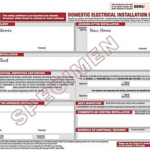
Electrical certificates verify that the electrical installation to which they are referring was designed, constructed and tested according to BS 7671 (IEE Wiring Regulations). electrical testing certificate can be issued by an electrician who has performed the work, or, alternatively, by a third-party certifier.
They also provide the person who is responsible for the safety of the electrical installation with a certification that it is safe to use at the time it was installed, and they can help to reduce the cost of exploratory work that may be required in future. They are also essential evidence in the case of an claim that injury or fire resulted from an electrical installation. They are able to be used to back any claims for compensation.
The certificate is required when an electrical installation has been installed or when an alteration to an existing installation has been made when a new circuit has been introduced. The certificate can be issued by an electrician who has completed the work or by a third party certifier. However, they should be kept by who did the work.
The electrician will carry out an array of inspections during the installation process to make sure that everything is operating efficiently and safely. This could include testing switches, sockets, and lighting fixtures. They will also examine the wiring system and identify any problems that may need to be addressed.
Once the installation is fully tested and certified, it will be handed over to the person who commissioned the work. The person responsible for the security of the installation and it will then be their obligation to keep a copy of the document, as well as an audit log, for a period of seven years.
Electrical certificates are not only legal requirements, but they are they are also a great method to build your brand and build confidence with customers. A logo can be printed on the document that can make it easier for potential customers to find you when they need your services in the near future.
It is a record
You can ensure safety for your family and home by paying attention to all electrical installations. An annual inspection of your wiring system can help you spot the telltale signs of wear and tear, which is a frequent occurrence in older homes. A handy little device called an meter reading tester will assist you in determining the condition of your wiring system and determine if there are any hidden dangers.
An electrician who is certified should be able to produce an EIC for your home. This could prove useful when you sell it. In the same way, your insurance company will likely require your certificate of installation to make sure that they are protected for anything a new homeowner could throw at them.
You can acquire a variety of different awards and certifications for different types of electrical work, with the most commonly used being an electrical installation certificate (EIC). A major or minor electrical installation works certificate is also offered by certain installers. This covers everything from the most complicated electrical sockets to repairs of your fuse box. The most important thing to remember is that the most reliable electrical installation certification is the one that's suitable for you and your family.